
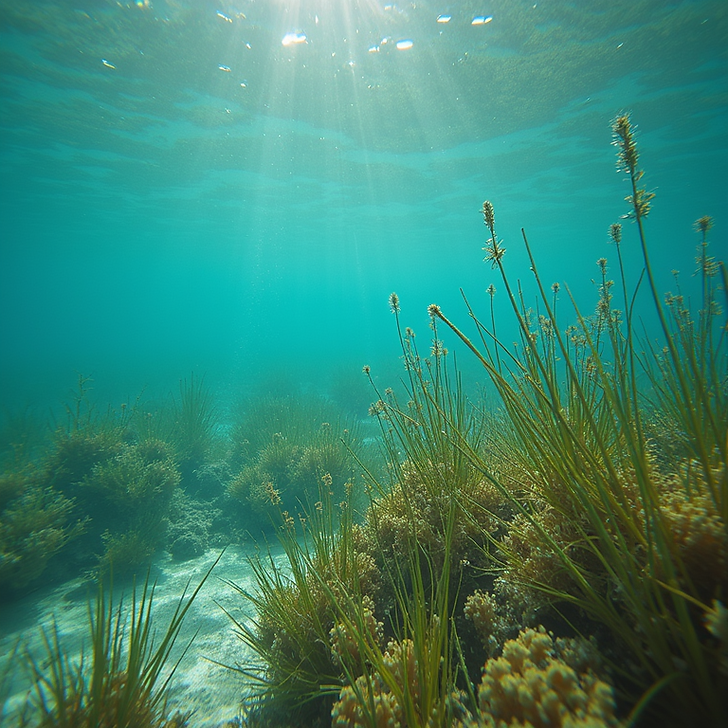
Seagrass Protection
Clean. Plant. Protect.
Crystal River’s Natural Barriers

Save Crystal River is committed to restoring and protecting the beauty of Crystal River, its springs, and Florida’s waterways for future generations.
A central part of that mission is the restoration and protection of seagrass (eelgrass) throughout Kings Bay.
Why Seagrass Matters
Seagrass is a resilient but vulnerable aquatic grass that forms the foundation of a healthy river ecosystem.
Healthy seagrass beds:
-
Seagrass beds provide habitat for fish and wildlife while supporting manatees and other aquatic life.
-
Seagrass beds help reduce the impact of storm surges while protecting shorelines and surrounding habitats.
-
Seagrass is called “The Lungs of the Sea” since 1 sq. meter (10 sq. ft.) of seagrass adds 10L (2.6 gal) of oxygen to the water each day.
-
Seagrass leaves, roots, and rhizomes help clean the water by directly absorbing nitrogen and phosphorus from the water column and sediment, helping to reduce algae blooms.
-
Seagrass beds can remove up to 90% of nitrogen and phosphorus from the water column, significantly improving water clarity.
-
Seagrass beds are up to 35 times more efficient than tropical rainforests at removing carbon from the environment.
When seagrass thrives, Crystal River thrives.
The Challenge

Over time, Kings Bay experienced significant water quality decline due to:
-
Noxious blue-green algae and Lyngbya
-
Sediment buildup
-
Clogged spring vents
-
Harmful anchoring practices
Excess nutrients contribute to toxic algae blooms that harm the seagrass beds wildlife depends on. Sediment and debris can smother seagrass and inhibit spring flow, impacting water quality and aquatic habitat.
Our Approach: Clean, Plant and Protect
Through dedicated state funding, private donations, community support, and various partnerships, Save Crystal River continues to advance long-term seagrass restoration.
Clean
Removal of Lyngbya, algae, muck, sand, rocks, concrete, and other debris from springs and water resources.
Plant
Planting seagrass pods in restored areas to rebuild healthy aquatic grass beds and reestablish habitat.
To date:
-
785,000+ seagrass pods planted
-
130+ acres planted (out of 171 permitted acres)
Protect
Long-term maintenance to protect thriving seagrass from negative environmental impacts and regrowth of harmful algae.
Protection efforts include:
-
Responsible Anchoring Program with spud pole rebates
-
Fertilizer ordinance advocacy to reduce nutrient runoff
-
Ongoing monitoring and maintenance
-
Community education and student planting initiatives
Results That Matter

Restoration efforts have resulted in:
-
890+ previously buried spring vents opened/restored
-
1200 cubic yards of algae, sand, rocks, concrete, and other debris removed
-
700M+ pounds of Lyngbya removed
Independent scientific biological surveys confirm that the grasses are resilient, even after recent hurricanes and tornadoes. The ecosystem shows strong signs of recovery with minimal replanting required.
Education & Future Generations
Save Crystal River partners with local schools through:
-
Annual Student-led Eelgrass Planting Days
-
EcoWeek initiatives
-
Hands-on classroom-grown seagrass planting
-
Student science fair projects based on seagrass and the Kings Bay Restoration Project
Students are learning firsthand how small actions can make a lasting impact on Florida’s waterways.
2026 Goals & Beyond
The work continues.
-
Clean, Plant and Protect 85 acres in Cedar Cove, Magnolia Cove, Pete's Pier, as well as Miller’s Creek and Spring, and other upland residential canals
-
Ongoing maintenance in previously restored areas
-
Collaboration with the Citrus County Environmental Academy to include seagrass studies in local aquatic systems.
-
Continued community involvement, seagrass planting, and protection initiatives
A great deal has been achieved, yet many restoration efforts remain.
What’s happening in Crystal River reflects a growing global challenge, but it also demonstrates how committed local action, science-based restoration and community partnerships can help safeguard these critical natural resources before they are lost.


